Bedding Care
How to Care for a Washable Wool Mattress Pad Without Damaging Its Fibers
Wool brings a quietly luxurious balance of softness, warmth, and breathability to a bed. But a washable wool mattress pad still deserves a measured hand: the right water temperature, a gentle wash, and patient drying can help preserve its loft, fit, and comfort for years.
A considered guide to washing, drying, airing, and protecting wool bedding.
Why wool calls for a gentler routine
A mattress pad has a practical job: it adds a layer between sleeper and mattress, catches everyday dust and perspiration, and can soften the feel of the bed. Wool adds another dimension. Its springy fibers help create a cushioned surface, while the material is valued for its ability to manage moisture and moderate temperature. Those qualities make a wool pad appealing in a bedroom, but they also make careful care worthwhile.
Wool fibers have a naturally textured surface and can respond to heat, agitation, and sudden changes in washing conditions. A vigorous cycle or hot dryer may encourage shrinkage, matting, or a change in the pad’s shape. The effect is not always dramatic after one wash, but repeated rough treatment can gradually dull the loft and make a once-supple layer feel denser or less even.
“Washable” is an invitation to clean the pad when needed, not a signal to treat it like a cotton sheet. The best approach is to follow the specific care label, prepare the washer and dryer thoughtfully, and avoid adding unnecessary steps. For Suite Sleep’s washable wool mattress pad, the stated guidance is to use cold water and natural detergent, then tumble dry on low heat or hang the pad to dry. Always check the label on your own item before washing, since construction and care instructions can vary between products.
Start with the care label—and the washer
Before stripping the bed, take a moment to read the care instructions attached to the pad. Look for the recommended water temperature, wash cycle, detergent, and drying method. If the instructions on the pad differ from a general guide, the product’s own label takes priority. Wool blends, quilting, elastic skirts, and backing fabrics may each affect the appropriate routine.
Next, consider the machine itself. A mattress pad needs room to move through water without being tightly wedged against the drum. If it is compressed into a small washer, detergent and rinse water may not circulate evenly; the pad may also twist or bunch during the spin. Check the washer’s capacity and compare it with the pad’s size. When the fit is cramped, a larger-capacity machine may be the more careful choice.
- Remove sheets, blankets, and other laundry so the pad has space to move.
- Check for loose threads, open seams, or damaged elastic before washing.
- Close zippers or fasten any closures, if the pad has them.
- Follow the label’s instructions for cycle selection; where a gentle cycle is recommended, avoid a more vigorous setting.
- Wash with similar colors when the care guidance calls for it.
Preparation is simple, but it can make a meaningful difference. A pad that can move freely is less likely to emerge twisted into a heavy bundle, and a quick inspection gives you the chance to address small issues before they meet the motion of a wash cycle.
Choose cool water and a mild detergent
For Suite Sleep’s washable wool pad, the recommended washing approach is cold water with natural detergent. Cool water is a sensible choice for wool because it avoids exposing the fibers to unnecessary heat. It also helps make the routine more predictable: rather than relying on a hot wash to do the work, let an appropriate detergent and a gentle cycle handle ordinary soil.
Use detergent sparingly and choose one that is suitable for the care instructions on the pad. More soap does not mean a cleaner result. An excess can be difficult to rinse from a thick, quilted layer, leaving residue that affects the feel of the fabric. Follow the detergent’s directions and the washer’s guidance rather than pouring by eye. If the pad’s label specifies a particular type of cleanser, use that instruction as your guide.
Avoid bleach unless the product instructions explicitly permit it. Chlorine bleach and other harsh cleaners can be too aggressive for delicate fibers and may affect color or material strength. Fabric softener is also unnecessary for this routine; it can leave a coating on textiles and is not a substitute for proper drying or airing. When in doubt, keep the wash simple: cool water, an appropriate mild detergent, and the gentlest cycle permitted by the label.
Do not pre-soak a wool mattress pad for an extended period unless its care instructions say to do so. A long soak adds time and water without necessarily improving the outcome, and may complicate handling once the pad becomes heavy. For a fresh spill, address the affected area promptly with a clean, absorbent cloth rather than making the entire pad undergo a full wash automatically.
The wash: calm, brief, and unhurried
Place the pad in the washer loosely, distributing it as evenly as possible. Add the detergent according to its directions, then select the cycle named on the care label. If a gentle cycle is recommended, avoid a setting designed for heavily soiled household textiles. Extra agitation is not a shortcut to freshness; for wool, it can be a source of unnecessary stress.
Once the cycle is complete, remove the pad promptly. Support it from underneath as you lift it, especially if it is saturated and heavy. Pulling from one corner can place strain on seams or stretch the fitted skirt. If it has become twisted, ease it back into shape rather than shaking it hard. A careful lift is a small habit that helps protect the pad’s construction as well as its fibers.
If the care label recommends an additional rinse or a particular spin setting, follow that direction. Otherwise, resist the impulse to add repeated cycles without a reason. The aim is a clean pad with as little handling and mechanical stress as its care permits.
Dry thoroughly, without rushing the process
Drying is where patience matters most. Suite Sleep’s care guidance allows low-heat tumble drying or line drying. If you choose the dryer, use low heat and check the pad periodically. High heat can stress wool fibers and may affect the fit or shape of the finished pad. A dryer cycle that is too hot or too long can also leave parts of a thick layer feeling over-dried while other areas remain damp.
For line drying, support the pad evenly so its weight does not pull it out of shape. Drape it over a broad, clean drying surface or a sturdy line that distributes the load. Avoid leaving one heavy section hanging unsupported from a narrow edge. If possible, turn or reposition the pad as it dries so air can reach both sides. Keep it in a well-ventilated area and allow enough time for the inner layers to dry completely.
Never put the pad back on the bed while it is still damp. Trapped moisture can create an uncomfortable sleeping surface and may contribute to musty odors. Before remaking the bed, feel across the pad, including its quilted sections, corners, and elastic edge. If any area feels cool or damp, continue drying. Do not rely on the surface alone; a thick pad may take longer to dry through than it appears.
Once dry, lay the pad flat and smooth it gently. Check that the edges and fitted skirt sit evenly. If the pad has developed a crease during drying, give it a little time to relax before deciding that its shape has changed. Avoid ironing unless the care label specifically permits it.
Between washes: air, protect, and spot-treat
A full wash is not the only way to keep a wool pad feeling fresh. Regularly airing the bed allows warmth and moisture from the night to dissipate. When convenient, pull back the covers after getting up and let the surface breathe before making the bed. Good room ventilation also helps reduce the lingering, closed-in feeling that can build up in a bedroom.
Use a mattress protector or fitted sheet above the pad when appropriate for your bedding setup. These layers can catch routine spills and everyday soil before they reach the wool, meaning the pad may need less frequent washing. Choose coverage that fits securely and does not bunch under the sheet. A pad that stays smooth on the mattress is more comfortable and easier to maintain.
For a small spill, blot rather than rub. Press a clean, absorbent cloth against the area to lift moisture, working gently and avoiding the temptation to scrub. Rubbing can spread the mark and disturb the surface fibers. Follow the product’s care instructions for any localized cleaning, and do not saturate the pad with water or cleaning solution. Allow the treated area to dry thoroughly before putting bedding back in place.
There is no universal washing schedule that suits every household. How often to wash depends on use, household needs, and the manufacturer’s directions. A pad under a protective layer may need less frequent laundering than one exposed directly to perspiration, pets, or spills. When it looks and smells fresh, and the care instructions do not call for frequent washing, airing and routine bedding changes may be enough between full washes.
Common mistakes to avoid
Good wool mattress pad care is less about elaborate products and more about avoiding a few preventable missteps. Keep these points in mind whenever the pad needs a refresh:
- Using hot water: Follow the label, and use cold water for Suite Sleep’s washable wool pad as directed.
- Choosing a harsh cycle: Excessive agitation can stress fibers, seams, and the pad’s overall structure.
- Overloading the machine: A crowded drum makes it harder for water to circulate and for the pad to move freely.
- Adding too much detergent: Residue can linger in a thick textile and affect its hand or freshness.
- Using bleach or softener by habit: These products are not a default part of wool care and should be avoided unless the label explicitly allows them.
- Drying on high heat: High temperatures can stress wool fibers and may affect fit and comfort.
- Storing the pad before it is fully dry: Moisture trapped in the layers can lead to an unpleasant odor.
- Pulling the pad by one corner when wet: A saturated pad is heavier; support its weight evenly.
A note on different washable wool pads
Care instructions are product-specific. A washable wool mattress pad may combine wool with cotton, plant-based batting, an elastic skirt, or another fabric layer. Those details can change the recommended wash and dry routine. For example, another maker’s washable wool-filled pad may specify a cold, gentle cycle with similar colors and low tumble drying, while Suite Sleep’s stated care directions call for cold water and natural detergent, followed by low-heat tumble drying or line drying. Those directions may sound similar, but they should not be treated as interchangeable instructions for every wool pad.
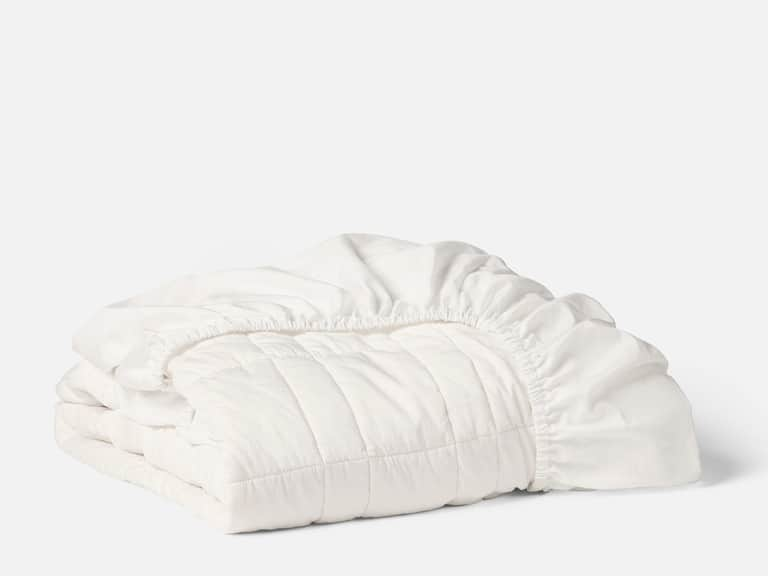
If you are comparing options, the Suite Sleep Washable Wool Mattress Pad is described as having an organic cotton cover and washable wool fill, with an 18-inch fitted pocket. Its care information recommends cold water with natural detergent and low-heat tumble drying or hanging to dry. Check the current label supplied with the product before each wash, especially if it differs from an earlier care card or online description.
Likewise, do not assume that every item marketed as washable can be treated in exactly the same way. A pad with a different shell, fill blend, quilting pattern, or backing may require a different cycle or drying method. The label is the most direct guide to caring for the particular piece you own.
A simple wool mattress pad care checklist
When wash day arrives, this concise sequence can keep the process calm and consistent:
- Read the care label and confirm the recommended wash and dry settings.
- Make sure the washer is large enough for the pad to move freely.
- Wash according to the label; for Suite Sleep’s washable wool pad, use cold water and natural detergent.
- Skip bleach, high heat, and unnecessary products unless the care instructions specifically permit them.
- Lift the wet pad evenly and reshape it gently.
- Dry on low heat or line dry, as directed, until every section is completely dry.
- Air the pad between washes and blot small spills promptly.
- Use a well-fitting protective layer to reduce routine soil reaching the wool.
Freshness that lasts
A well-kept wool mattress pad does not require a complicated ritual. It needs room in the washer, cool water, suitable detergent, gentle handling, and enough time to dry properly. Those modest habits help preserve the qualities that make wool so appealing in bedding: a soft, cushioned feel, breathable comfort, and a composed finish beneath the sheet.
For a washable wool mattress pad, care begins before the wash cycle and continues until the last trace of moisture has lifted. Follow the label, take spills seriously without over-scrubbing, and let the pad air between launderings. In a bedroom, freshness is often less about doing more than about doing the right things, consistently and with care.
Frequently asked questions
Can I wash a wool mattress pad in a regular washing machine?
Only if the product’s care instructions allow machine washing and the washer is large enough for the pad to move without being compressed. Follow the label’s cycle guidance and check the machine’s capacity before starting.
What detergent should I use?
Follow the care label. Suite Sleep recommends natural detergent for its washable wool mattress pad. Use the amount directed by the detergent maker and avoid harsh cleaners unless the product instructions explicitly permit them.
Can I put a wool mattress pad in the dryer?
Some washable wool pads may be tumble dried on low heat. Suite Sleep’s guidance allows low-heat tumble drying or line drying. Confirm the instructions for your specific pad, and do not substitute high heat.
How can I keep the pad fresh between washes?
Air the bed regularly, keep the room ventilated, use suitable protective bedding, and blot small spills promptly. Wash the pad when needed according to its care instructions rather than relying on a fixed schedule that may not suit your household.