Bedding & Nursery Care
Organic Crib Bedding: Keeping Baby’s Sleep Surface Fresh
A thoughtfully made crib pad can bring breathable comfort to a baby’s sleep space. Keeping it fresh is less about elaborate routines than gentle, consistent care: follow the label, act promptly on spills, and protect the fabric from unnecessary heat and harsh cleaners.
Nursery style may begin with a quiet palette, a beautifully made sheet, or the small pleasure of choosing natural materials. But a baby’s sleep surface is also an everyday textile, exposed to warmth, moisture, and the occasional leak or spill. Maintaining it well means making hygiene part of the ordinary rhythm of care—not turning the crib into a complicated cleaning project.
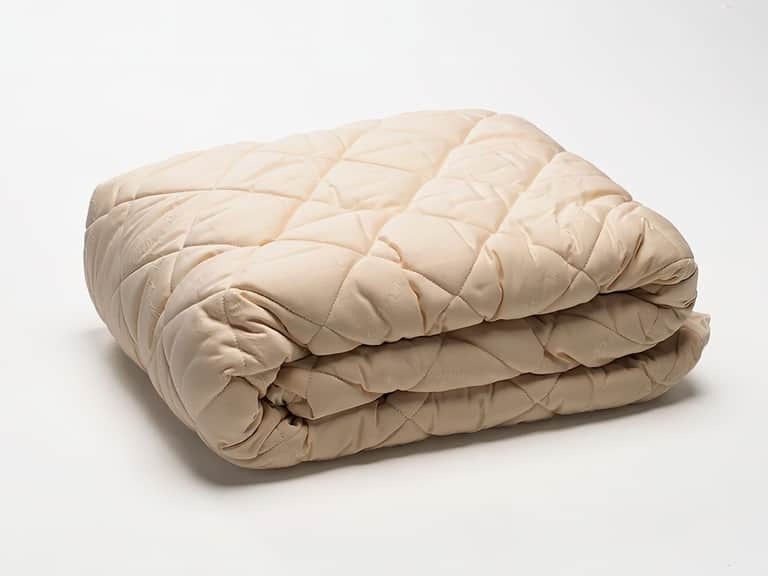
Organic crib bedding can be a considered choice for families who value material transparency and a breathable feel. A GOTS-certified cotton crib mattress pad, for example, may place a soft, quilted layer between the mattress and fitted sheet. Its construction, stitching, and method of attachment all affect how it should be laundered. Gentle washing and careful drying help keep the pad fresh while preserving its shape and fit.
The first principle is simple: the care label takes precedence over general advice. Products can look similar yet differ in fabric, quilting, elastic, and finishing. A routine suited to one organic crib mattress pad may not suit another. Before the first wash—and whenever instructions are unclear—check the manufacturer’s directions.
What makes crib bedding organic?
“Organic” describes how particular fibers are produced and, depending on the certification, how parts of the textile’s processing are assessed. It does not mean that bedding never needs washing, that it is self-cleaning, or that every product carrying the word has identical standards. Look for clear certification details and product-specific care guidance rather than relying on a broad label alone.
For a GOTS-certified cotton item, certification applies to defined requirements across the textile chain. It can be useful information when selecting bedding, but it does not replace routine laundering or tell you exactly how to wash a finished pad. For that, the product label is the practical authority.
Construction matters as much as fiber content. A crib pad may use cotton fabric on both sides, quilted squares that hold the layers together, and elastic corners or a fitted skirt to secure it. Stitching can help keep filling distributed, while fitted corners are designed to hug the mattress. Repeated agitation, overly hot drying, or an ill-fitting wash load can put strain on these details over time.
For a straightforward cotton option, the Organic Crib Mattress Pad is described as 100% organic cotton, with two-inch quilted squares and a 220-count percale cover. Its care information recommends a cold, gentle machine wash and low tumble drying. Always confirm the instructions supplied with your own item, since care details can vary by product and may be updated.
A measured approach to crib pad care
A fresh sleep surface is built through small, repeatable habits. Use a clean fitted sheet, keep spare bedding available, and respond promptly when a spill occurs. Launder the pad when it is soiled and follow the care schedule recommended by its maker. There is no need to subject an unsoiled pad to aggressive cleaning or use disinfectants as a routine shortcut.
1. Read the instructions before washing
Confirm whether the pad is machine washable, which water temperature is recommended, and whether tumble drying is permitted. Check for directions about detergent, bleach, fabric softener, or spin settings. If the tag and product documentation differ, consult the manufacturer for clarification. A certification or fiber description alone cannot establish the safest wash cycle.
2. Deal with a spill promptly
Remove the sheet and any other affected bedding. Blot moisture with a clean cloth rather than rubbing it deeper into the fabric. If the pad is washable, launder it according to its instructions. Avoid pouring cleaner directly onto quilted layers unless the manufacturer allows it; excess liquid can be difficult to rinse from padding and may leave residue.
3. Keep the wash gentle
When the care label permits machine washing, a gentle cycle and the stated temperature can reduce unnecessary stress on the cotton and quilting. Do not overload the washer: bedding needs room to move and rinse. Use an appropriate amount of a mild detergent, following both the product directions and the detergent label. More soap does not make a pad cleaner and can make thorough rinsing harder.
4. Rinse away detergent
Residue can affect the feel of fabric and may attract soil. If the washer has an extra-rinse option and the product’s instructions permit it, that may help remove remaining detergent. Avoid adding bleach, stain treatments, or fabric softener unless the manufacturer specifically indicates that they are suitable.
5. Dry with care
Follow the stated drying method. If low tumble drying is allowed, use low heat and remove the pad when dry rather than leaving it in a hot drum. High heat can stress elastic and fibers, and may affect a pad’s fit or quilted structure. If air drying is recommended, spread the pad so air can circulate and make sure it is fully dry before putting it back on the mattress.
6. Check the fit before remaking the bed
Once dry, inspect the seams, quilting, and elastic corners. A pad should lie flat and remain secure in the position intended by its design. If it has shrunk, stretched, or become damaged, stop using it until you have checked the product guidance. For a baby’s sleep space, the mattress and bedding should be arranged according to current safe-sleep recommendations; do not improvise with extra layers or loose items.
A practical schedule for nursery hygiene
There is no single laundering calendar that suits every household. A useful schedule responds to actual use, spills, and the care label. Keep clean spare sheets close at hand so a change can be made promptly, and make the mattress pad part of the nursery’s regular bedding check.
- After a spill or leak: Remove the bedding, blot the affected area, and wash the pad if its instructions allow. Make sure it is completely dry before use.
- During routine bedding changes: Check the pad for visible marks, dampness, loose stitching, or changes in fit. Launder it as needed and in accordance with the care label.
- At regular nursery resets: Review the pad’s condition and confirm that it still fits the mattress as intended. Replace it if it is damaged or no longer sits securely.
- Before storing spare bedding: Wash and dry it fully, then store it in a clean, dry place so it is ready when needed.
This approach is deliberately uncomplicated. Washing too infrequently after a spill can leave moisture or soil in the textile; washing more often than necessary, especially with aggressive cycles, can wear down fabric and elastic. A measured routine balances cleanliness with care for the item’s construction.
Stains, odors, and the temptation to over-clean
Fresh stains are generally easier to manage than dried ones, so prompt blotting is useful. But strong fragrances, concentrated cleaners, and improvised chemical mixtures are not a substitute for correct laundering. They may leave residues, affect the fabric, or make the care process less predictable. Never mix cleaning products, and do not use a treatment that conflicts with the manufacturer’s instructions.
If an odor remains after washing, first check whether detergent has rinsed away and whether the pad is completely dry. Lingering dampness can be mistaken for a cleaning problem. Do not put a damp pad back on the mattress or cover up a persistent musty smell with fragrance. Inspect the mattress and surrounding area, and address any moisture source. If the pad cannot be cleaned effectively using its approved care method, contact the manufacturer about next steps.
A crib pad is not a mattress encasement unless its design specifically says it is. Nor should “organic” be interpreted as “waterproof,” “antimicrobial,” or “stain-proof.” Use the product’s stated features, not assumptions based on its material or certification.
Why low heat and a gentle detergent matter
Cotton is durable, but every textile has limits. Heat and friction can influence shrinkage, surface feel, and the life of elastic. Quilted construction adds another consideration: the pad must retain its shape and keep its layers together. A low-heat setting, where permitted, is a practical way to avoid unnecessary exposure to high temperatures.
Detergent should be chosen for effective everyday laundering, not for the strongest scent or most dramatic stain claims. Use the amount recommended for the load and your machine. Harsh cleaners may be unsuitable for a particular finish or component, while excess detergent can be difficult to rinse out. If your household has specific sensitivities, consult a qualified health professional for personal advice and follow product labels carefully.
“Gentle” does not mean neglecting a spill. It means cleaning the item in a way that respects its material and construction. If a mark does not come out after an approved wash, check the care instructions or ask the manufacturer before trying a stronger product.
Fit is part of care
A pad’s corners, skirt, and dimensions are not merely finishing details; they determine how it sits on the mattress. Washing and drying can affect fit, particularly when directions are ignored. Before the first use, check the mattress dimensions and the pad’s intended size. After laundering, smooth the pad into place and make sure the corners are secure and the surface is even.
For baby sleep spaces, follow current guidance from trusted public-health and pediatric sources. A crib mattress should be firm and fit the crib properly, with a fitted sheet and no loose bedding or soft objects in the sleep area. A pad should be used only if it is designed for the mattress and does not compromise a secure, flat sleep surface. When in doubt about a product’s suitability, seek advice from the manufacturer or a pediatric health professional.
A few common care myths, reconsidered
“Organic bedding does not need frequent care.”
Organic describes materials and, where applicable, production standards. It does not prevent ordinary soil or moisture. Follow the same practical hygiene habits you would use for any crib bedding, while respecting the item’s specific care label.
“Hotter water always means a cleaner result.”
Not necessarily. The right temperature depends on the product’s construction and washing instructions. Higher heat can stress fibers or elastic. Use the temperature specified by the manufacturer rather than assuming that hotter is better.
“A strong fragrance means the pad is fresh.”
Fragrance masks odor; it does not establish that an item is clean or dry. A thorough wash, an adequate rinse, and complete drying are more useful measures of good routine care.
“Any cotton crib pad can be cared for the same way.”
Fiber content is only one part of the story. Quilting, elastic, coatings, and other construction details can change the recommended method. The tag or manufacturer’s instructions should guide every wash.
The quiet luxury of a well-kept sleep surface
Good nursery care is rarely theatrical. It is a clean sheet placed smoothly over a suitable mattress, a spare set ready for a late-night change, and a cotton pad washed without unnecessary chemicals or heat. These modest details support the practical life of the bedding and help keep the room feeling orderly.
When choosing a GOTS-certified cotton crib pad, consider its materials, construction, fit, and care instructions together. A quilted organic crib mattress pad may offer a breathable layer and straightforward laundering, but its longevity depends on using the method its maker recommends. Gentle washing, low-heat drying when allowed, prompt attention to spills, and careful inspection create a routine that is both simple and considerate.
Freshness does not require a cabinet full of specialty products. It asks for consistency, good information, and respect for the textile in your hands. In the nursery, that restrained approach is often the most elegant one.
Quick crib pad care checklist
- Read the pad’s care label before the first wash.
- Blot spills promptly; avoid rubbing or saturating the quilted layers.
- Use a gentle cycle and the recommended temperature when machine washing is allowed.
- Use detergent sparingly; avoid bleach, softener, and harsh cleaners unless specifically approved.
- Dry as directed, using low heat only when permitted, and ensure the pad is fully dry.
- Check quilting, seams, and elastic, then confirm that the pad fits securely.
- Keep the crib sleep space arranged in line with current safe-sleep guidance.